Nimes


Nimes derives its name from a Roman village called Nemausus and was originally located on the Via Domitia, a Roman road constructed in 118 BC, connecting Italy to Spain. Between 4000 and 3500 BC semi-nomadic cultivators spent time at the future site of Nimes. Nimes became a Roman colony sometime before 28 BC.
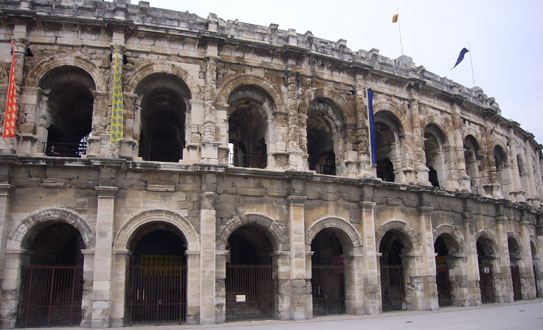
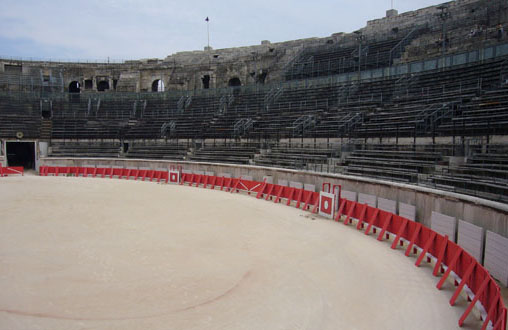
Nimes is now well-known for having the most well-preserved Roman amphitheater in the world, which dates from the end of the 2nd century AD. It was used in early Roman times for lion fights (men fighting lions with only long wooden spears with metal tips), executions (with lions devouring people tied to stakes or untied people given no weapons to defend themselves or men being told to kill other men who would, in turn, then be killed by lions) which took place at midday while most people in attendance were out enjoying lunch (it is said that these events were among the favorite, however, of the bloodthirsty Claudius) - see how humane our death penalty is today (oxymoron)), and Gladiator fights. To this day, the arena is used for bullfights!